Festival Art Souterrain
Exhibition place
Activities
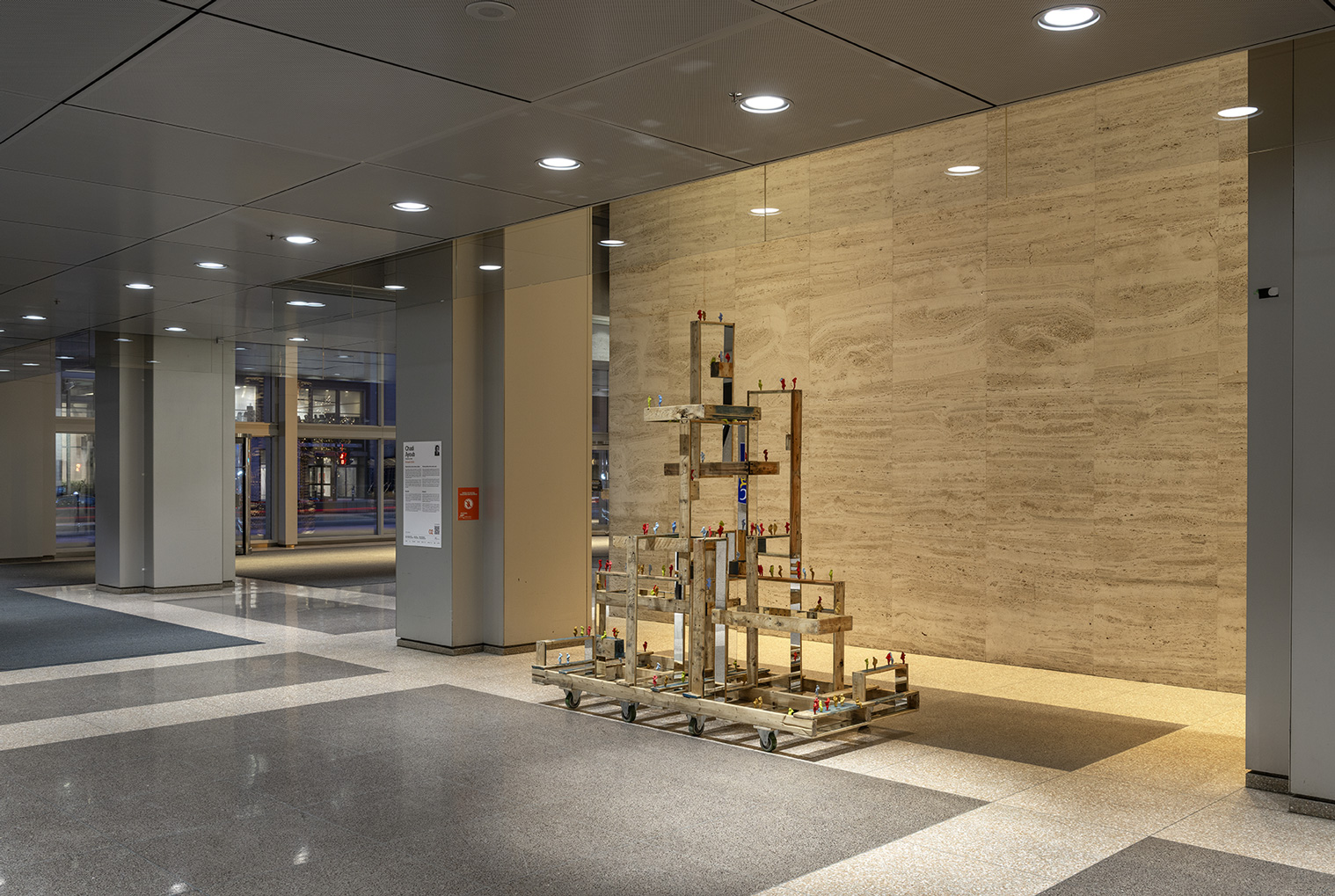
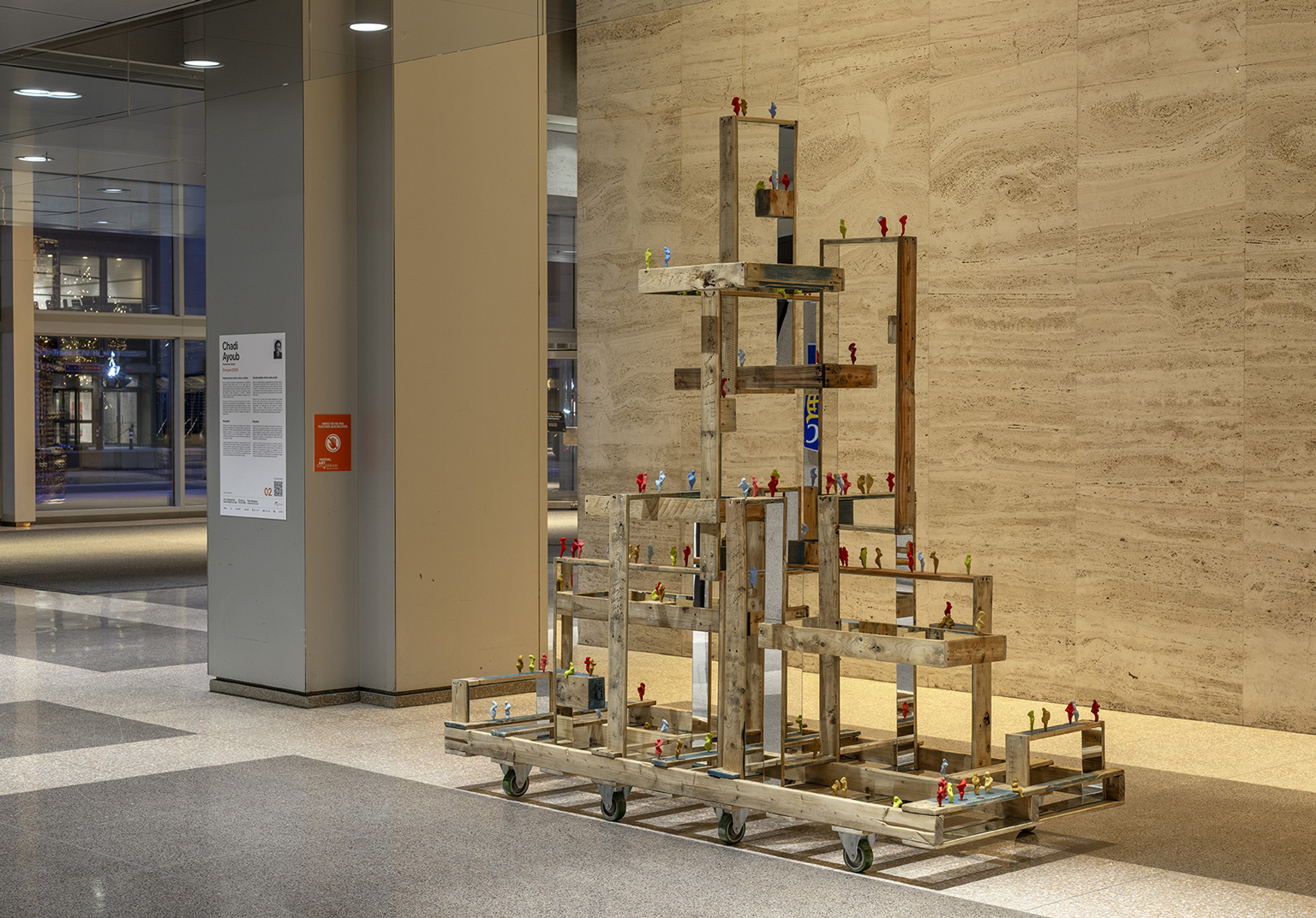
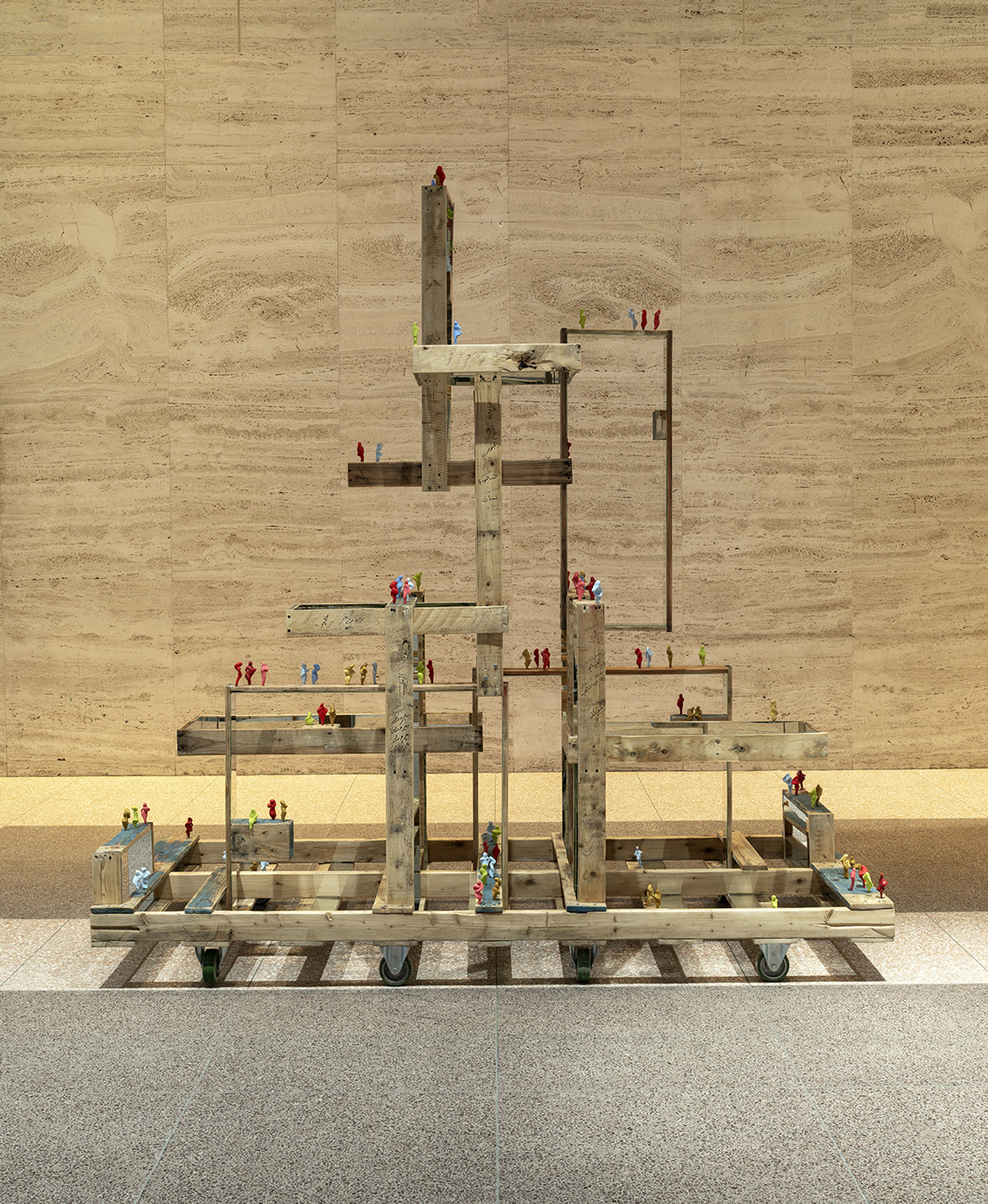
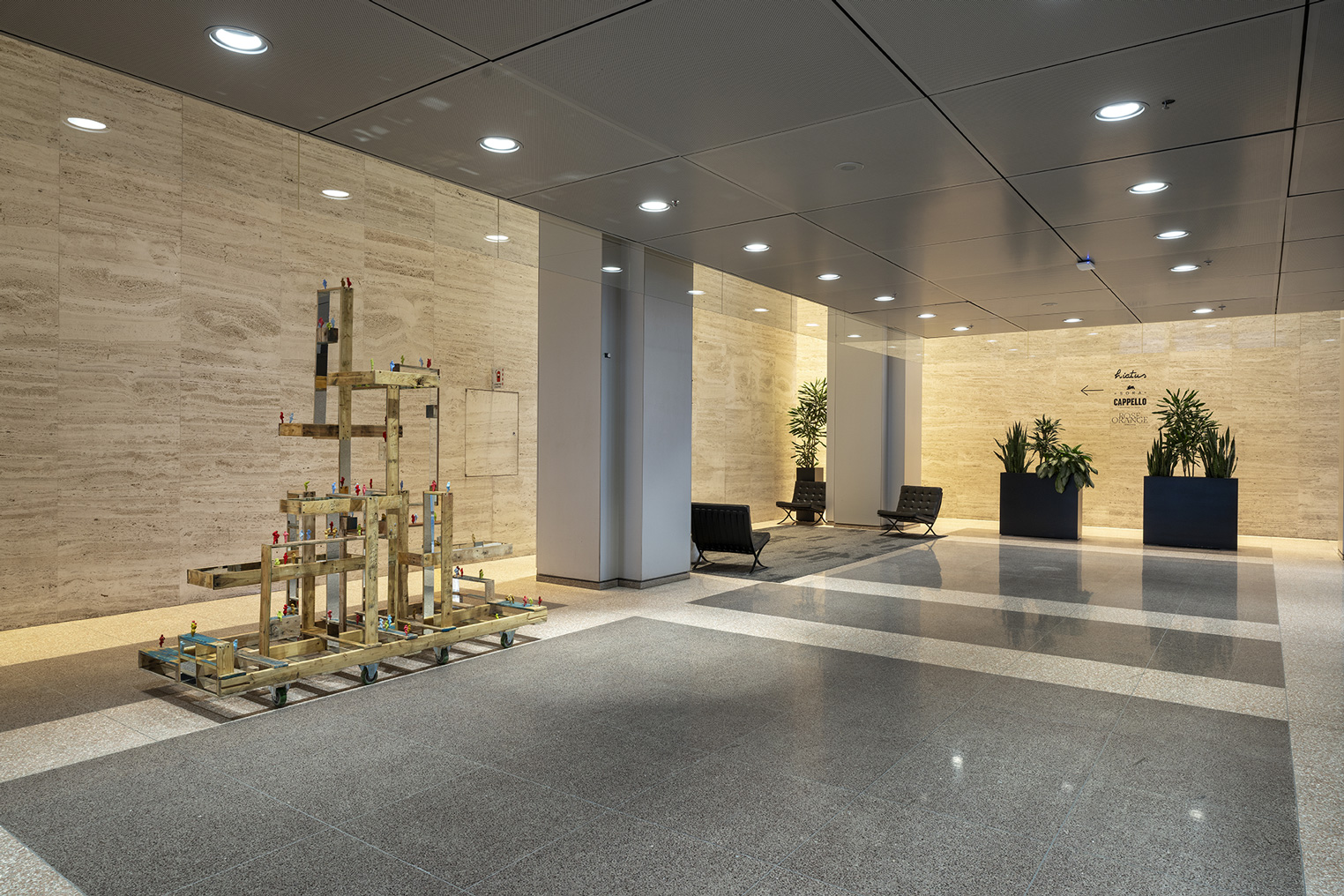
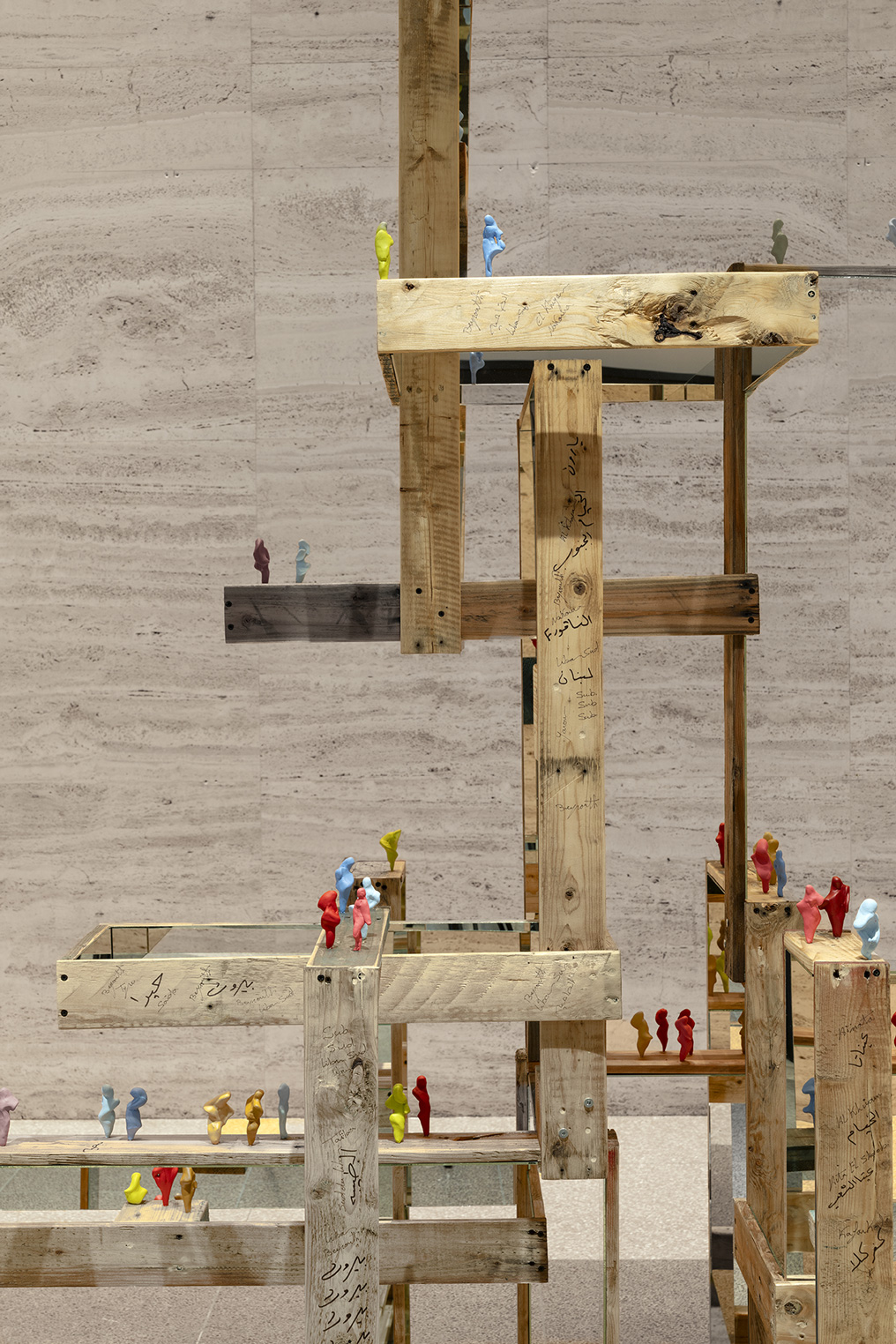
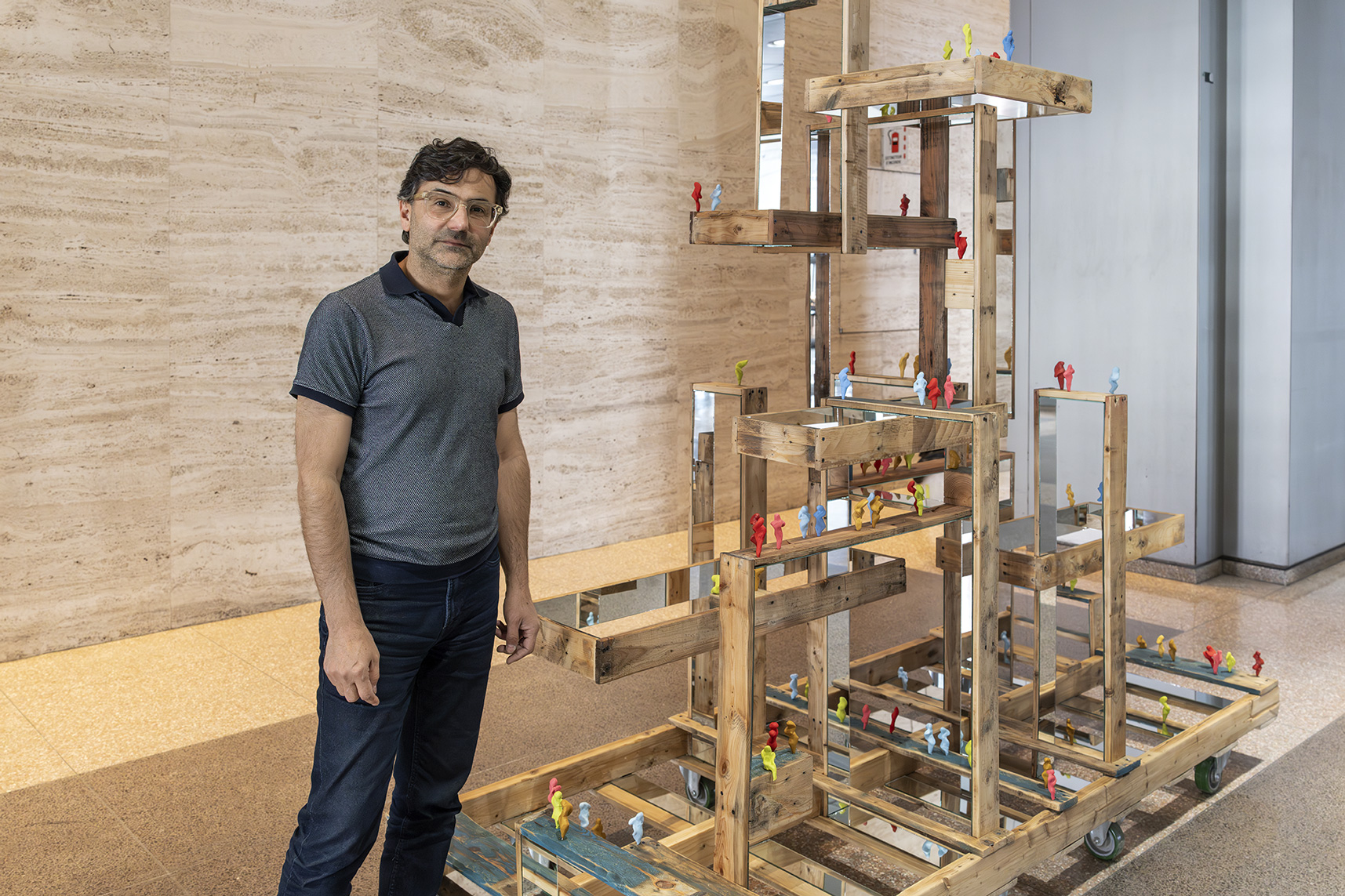
Entropie (2026)
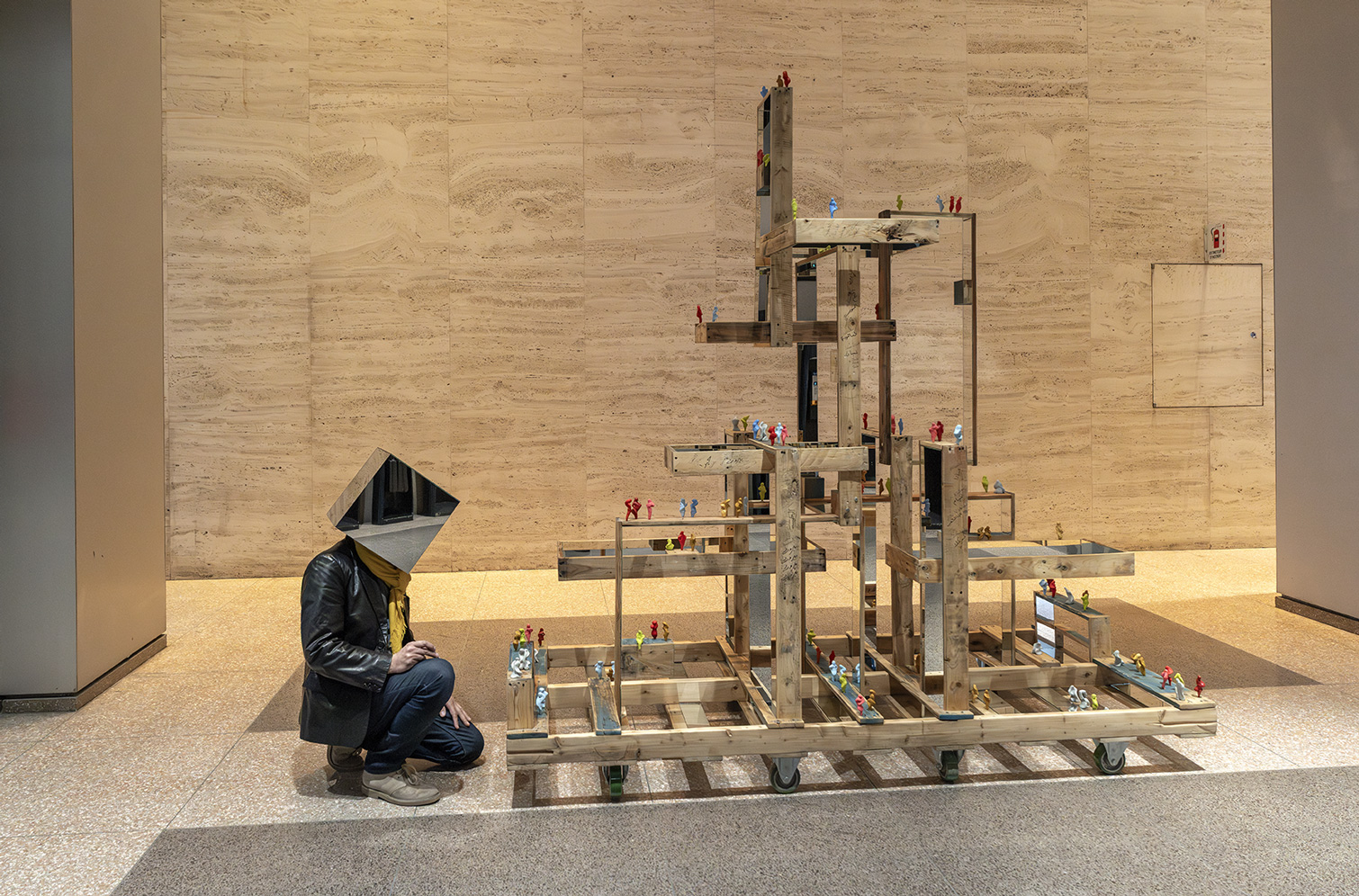
Wooden palettes, mirrors, resin, acrylic
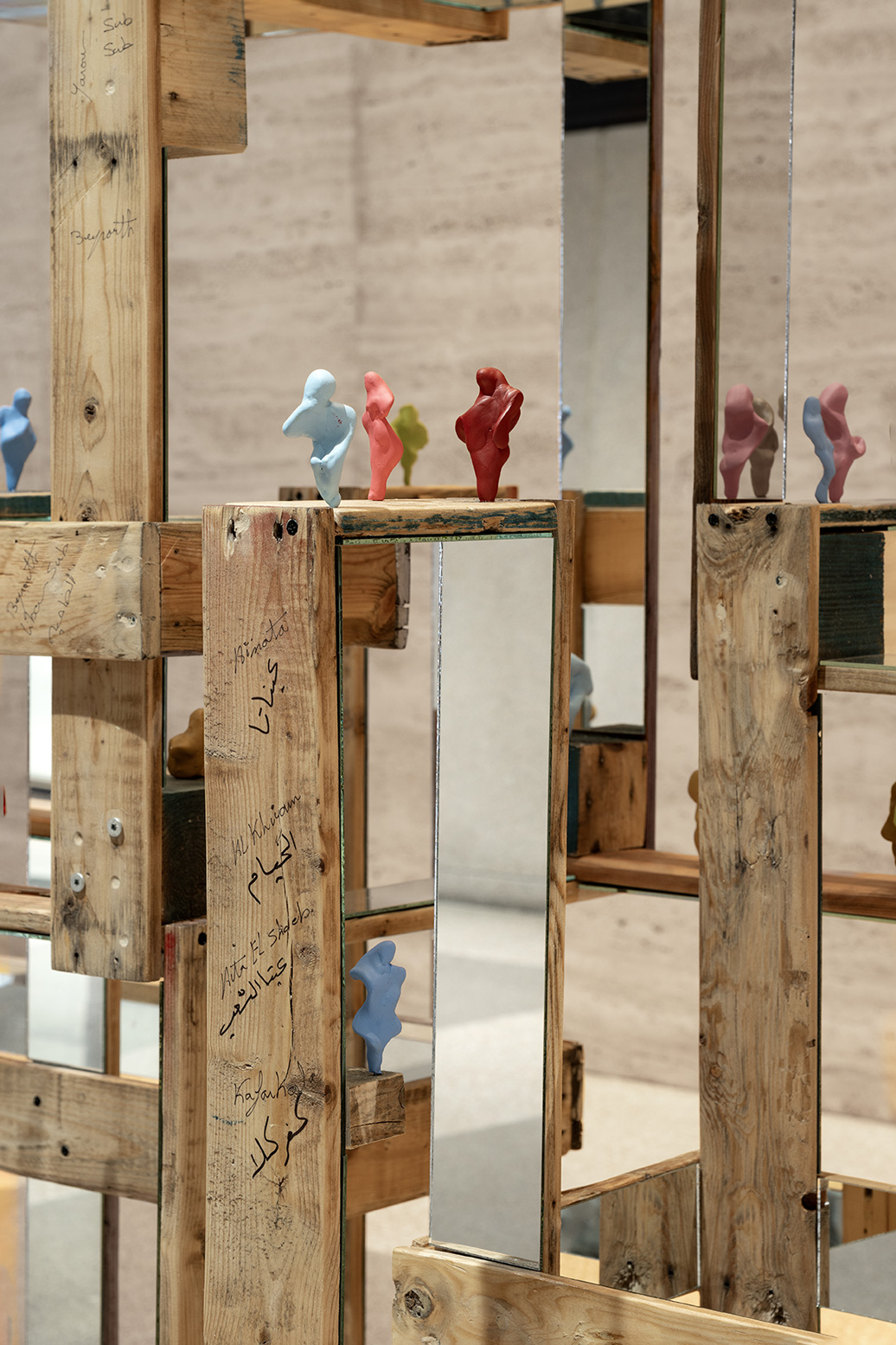
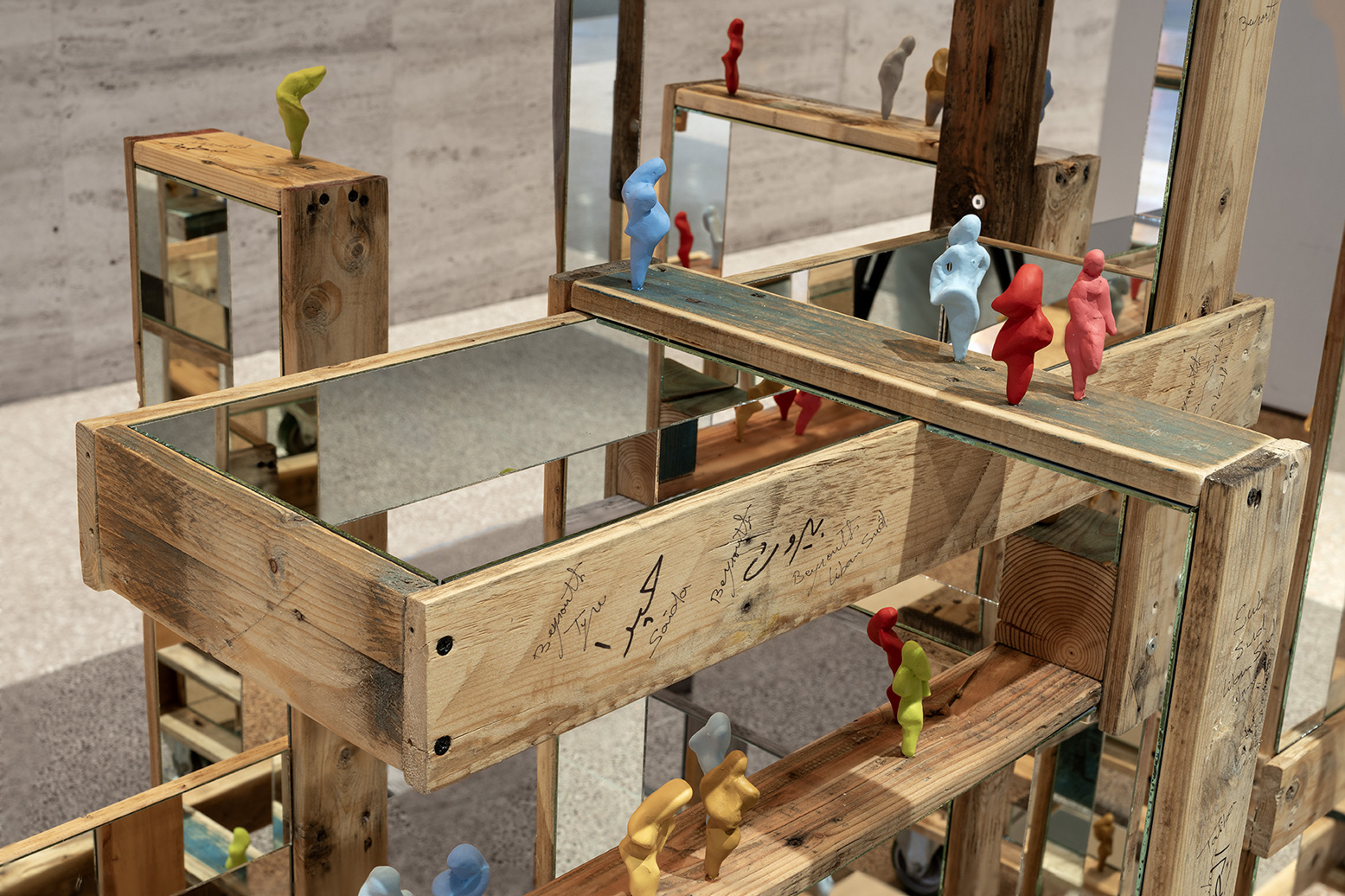
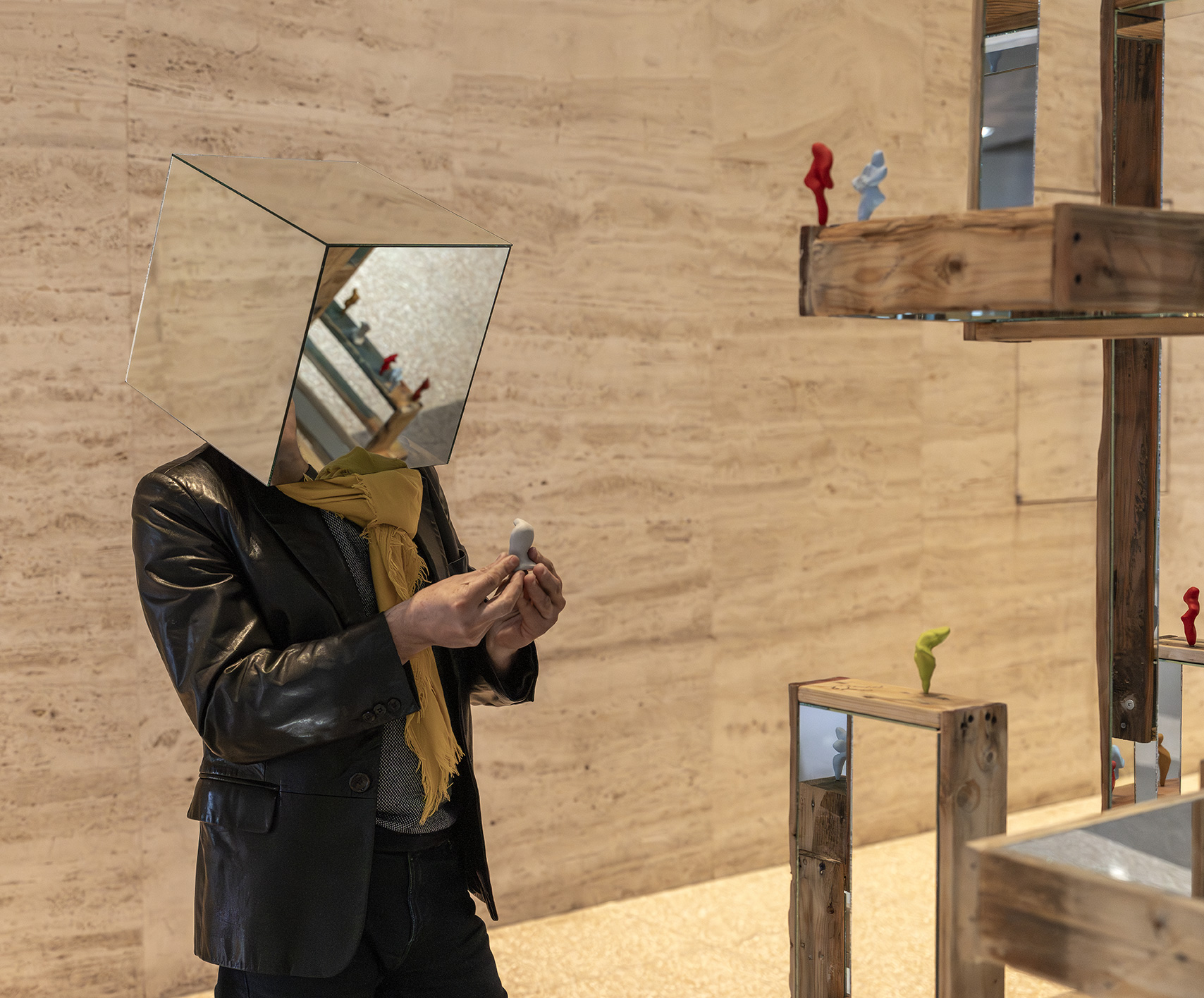
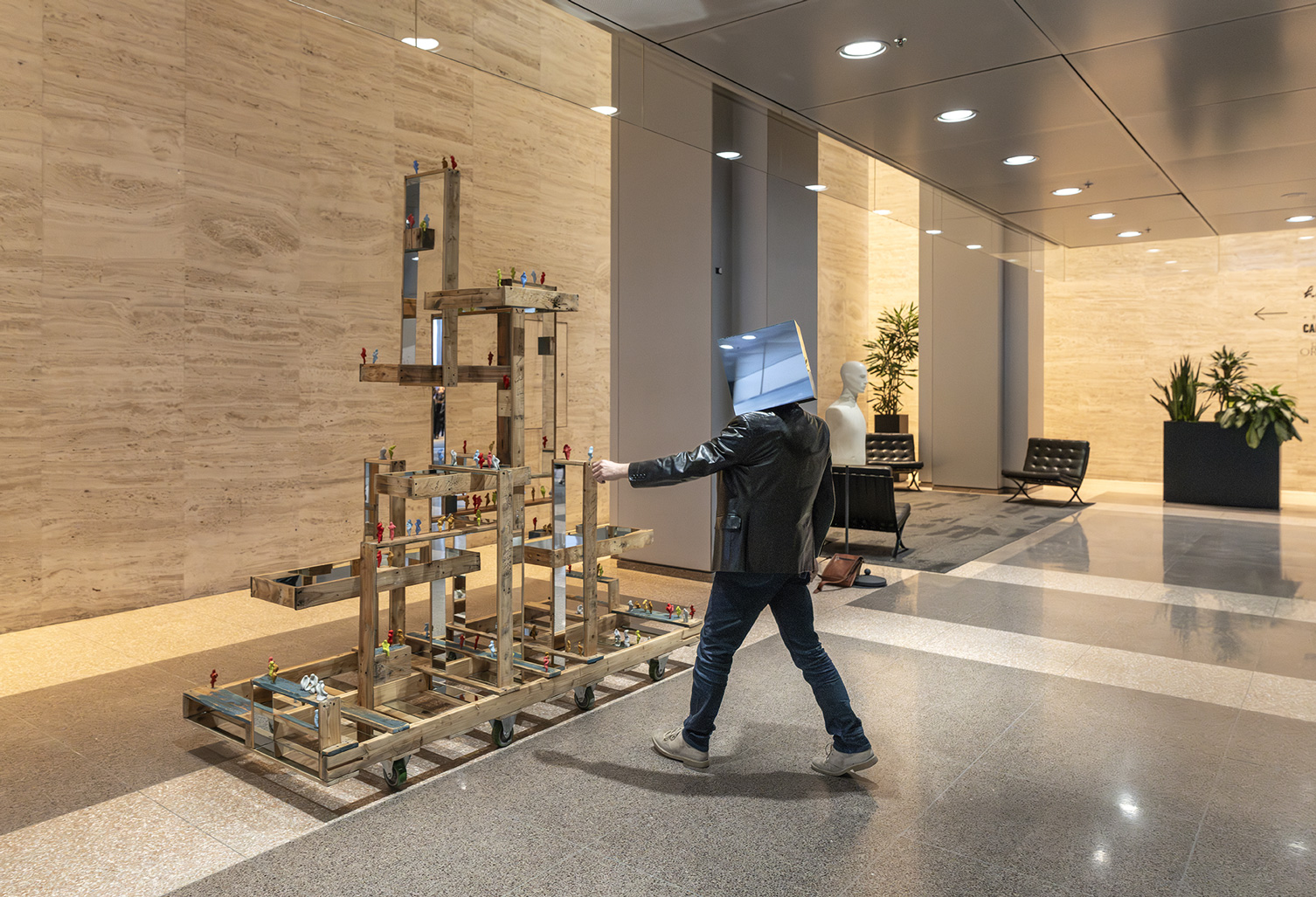
Made from reclaimed pallets and reassembled into a modular structure, Entropie rises like a fragile tower. Within this makeshift structure, mirrors form thresholds, multiply reflections, blur points of reference, and draw the public into a labyrinthine visual journey where each step reveals a new perspective. Colorful figurines, suspended or perched at varying heights, embody a delicate presence that speaks with the monumentality of the material.
Through its use of mirrors, which captures passersby and brings them into contact with the structure, and through the exploration of opposing forces—light and darkness, stability and precariousness, monumentality and miniaturism—the work reveals its inherent ambiguity. The space it creates becomes both a refuge and a vertiginous place, a reminder that all architecture, whether intimate or collective, rests on a constant tension between balance and collapse.
Homme-Miroir (2026)
Performance
A hybrid figure, Homme-Miroir is a character with a cubic head entirely covered by mirrors. Through his slow movements in space, he generates spontaneous encounters with the public, who witness the reflection of their own fragmented image in the mirrors.
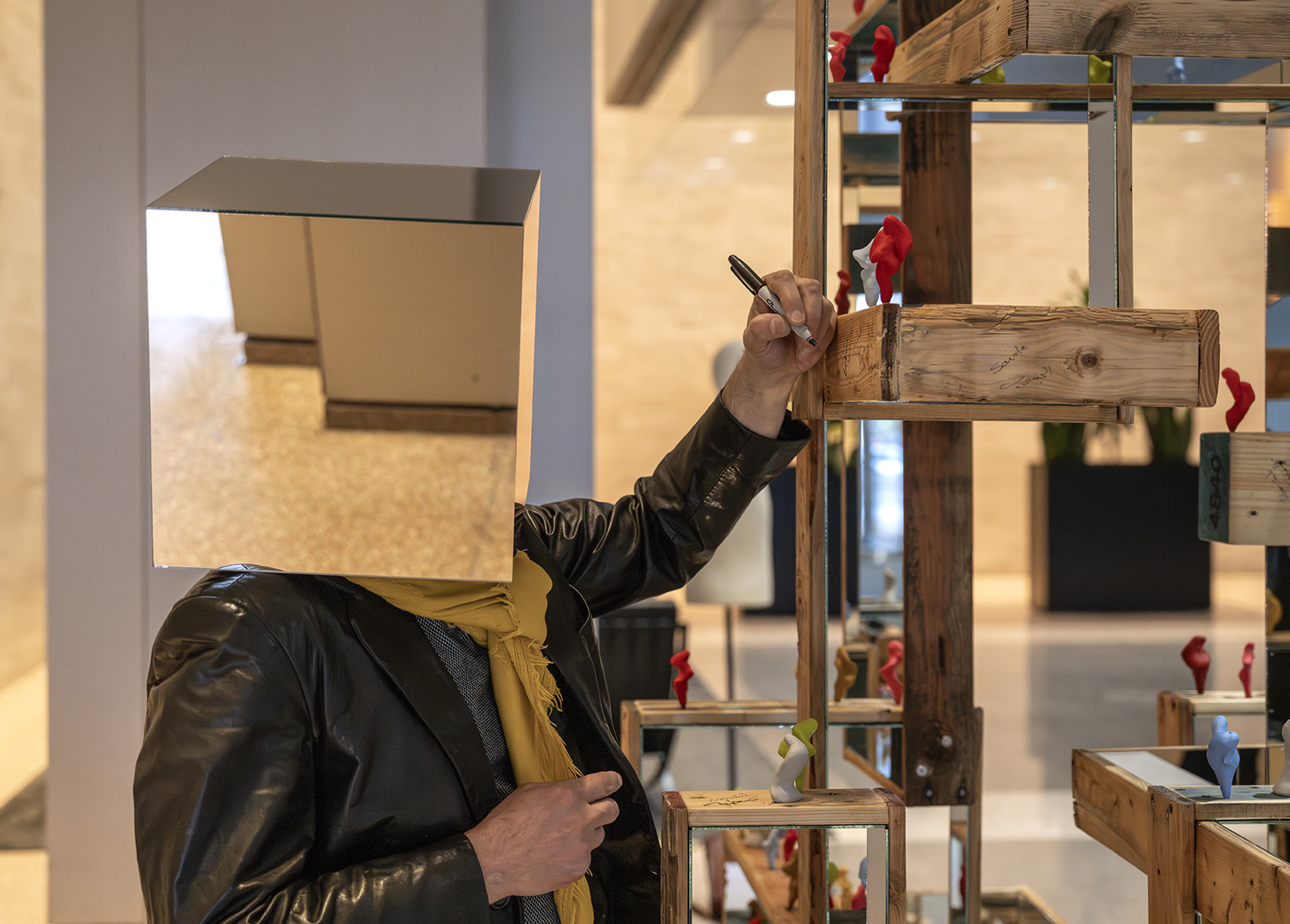
The figure of the Homme-Miroir acts as a mediator between the one who watches and what is being watched. During his interactions with people, he collects impressions, gestures, and brief narratives, which he then transcribes upside down on some of the wooden slats of the sculpture Entropie. These inscriptions, visible only through the play of mirrors, are integrated into the structure of the work like hidden traces left by the community. Entropie thus becomes a living emblem where reflections, memories, and human presences intertwine to shape a shared sensitive space that transforms over time.
In this context, the exchanged glances and the points of view of each person become playing fields that reveal power relations, but most importantly possibilities for care, solidarity, and collective reinvention.
Biography
Visual artist Chadi Ayoub is a graduate of the Faculty of Fine Arts and Architecture at the Lebanese University in Beirut, and also holds a graduate diploma (DESS) in Event Design from the University of Quebec in Montreal (UQÀM). His artistic practice, nourished by interdisciplinary research, explores hybrid identities through self-representation and introspection. He reflects on the phenomena of cultural and social change from a broader perspective.
A recipient of several awards and grants, he is actively involved in regional cultural development. He sits on the board of directors of Culture Lanaudière and acts as a regional expert for the Ministry of Culture and Communications’ program on integrating art into architecture. In 2021, he founded ROND-POINT, the first artist-run centre for contemporary art in Terrebonne, thus establishing a space for research, dissemination, and encounters in the visual arts.
Works by the artist