Festival Art Souterrain
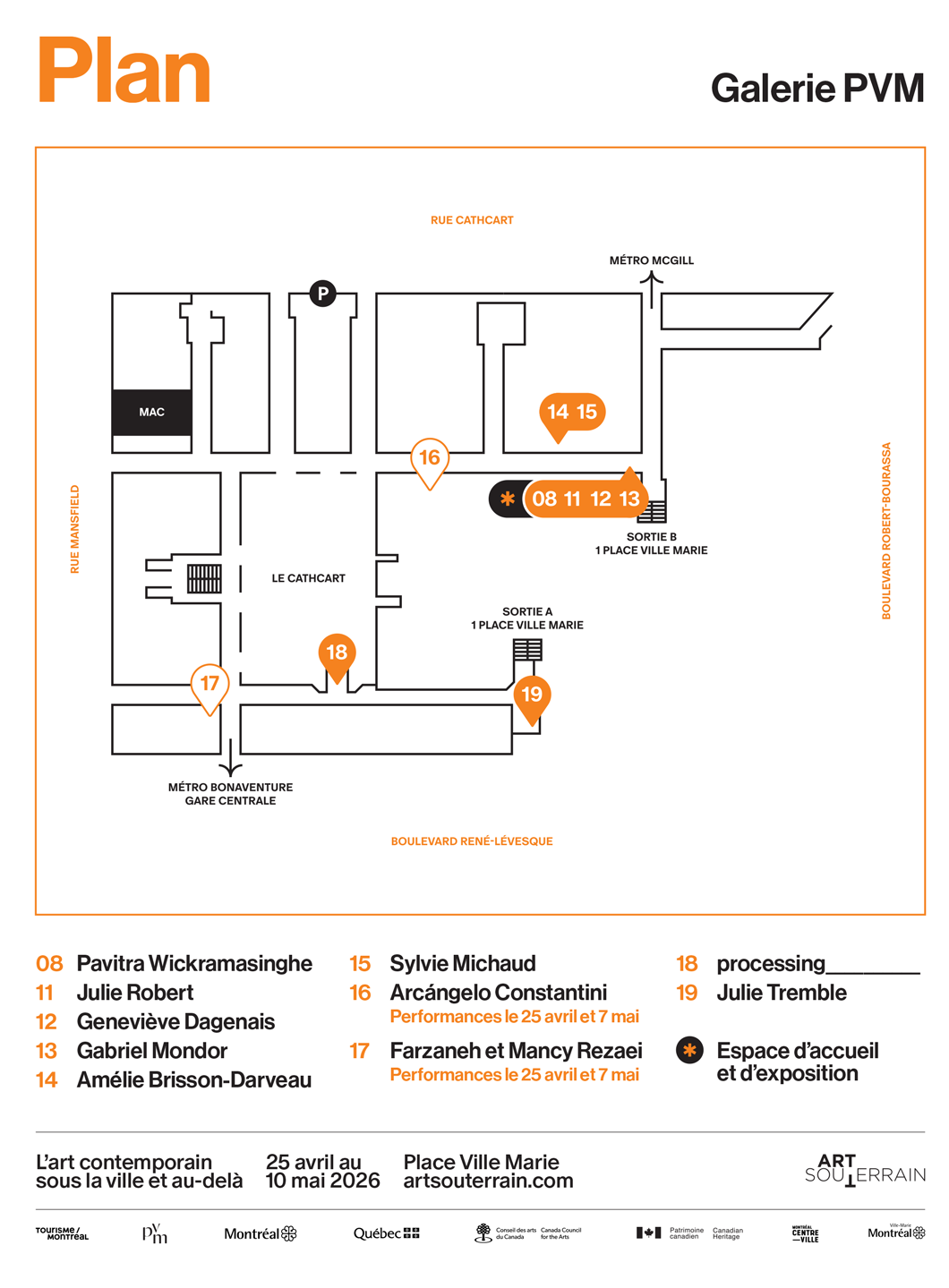
Exhibition place
Activities
“One element, treated with a hydrophobic-inspired process, reveals under a fine mist my dog Emile’s coat, letting the living inscribe itself into matter that seems inert.”
Archipel (2025)
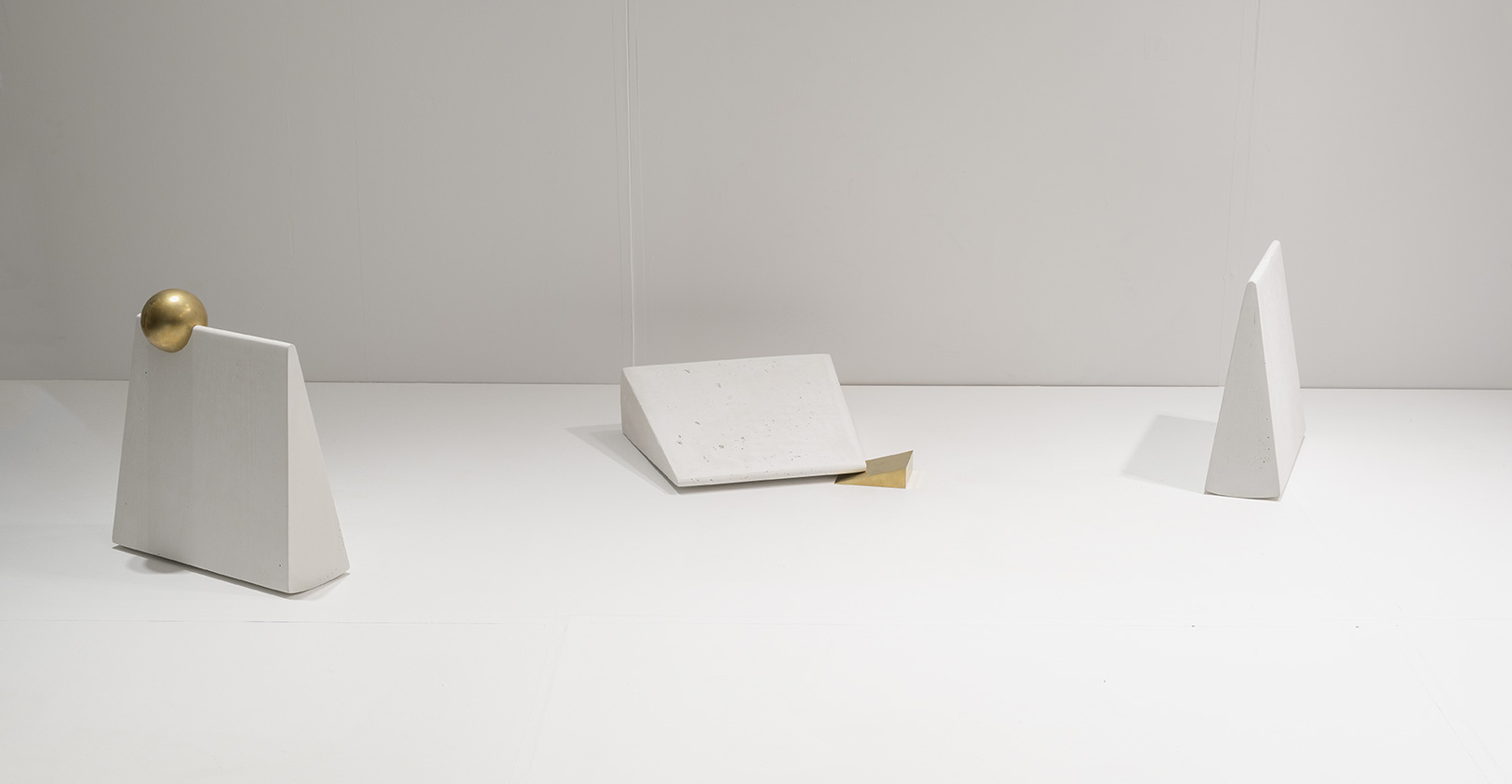
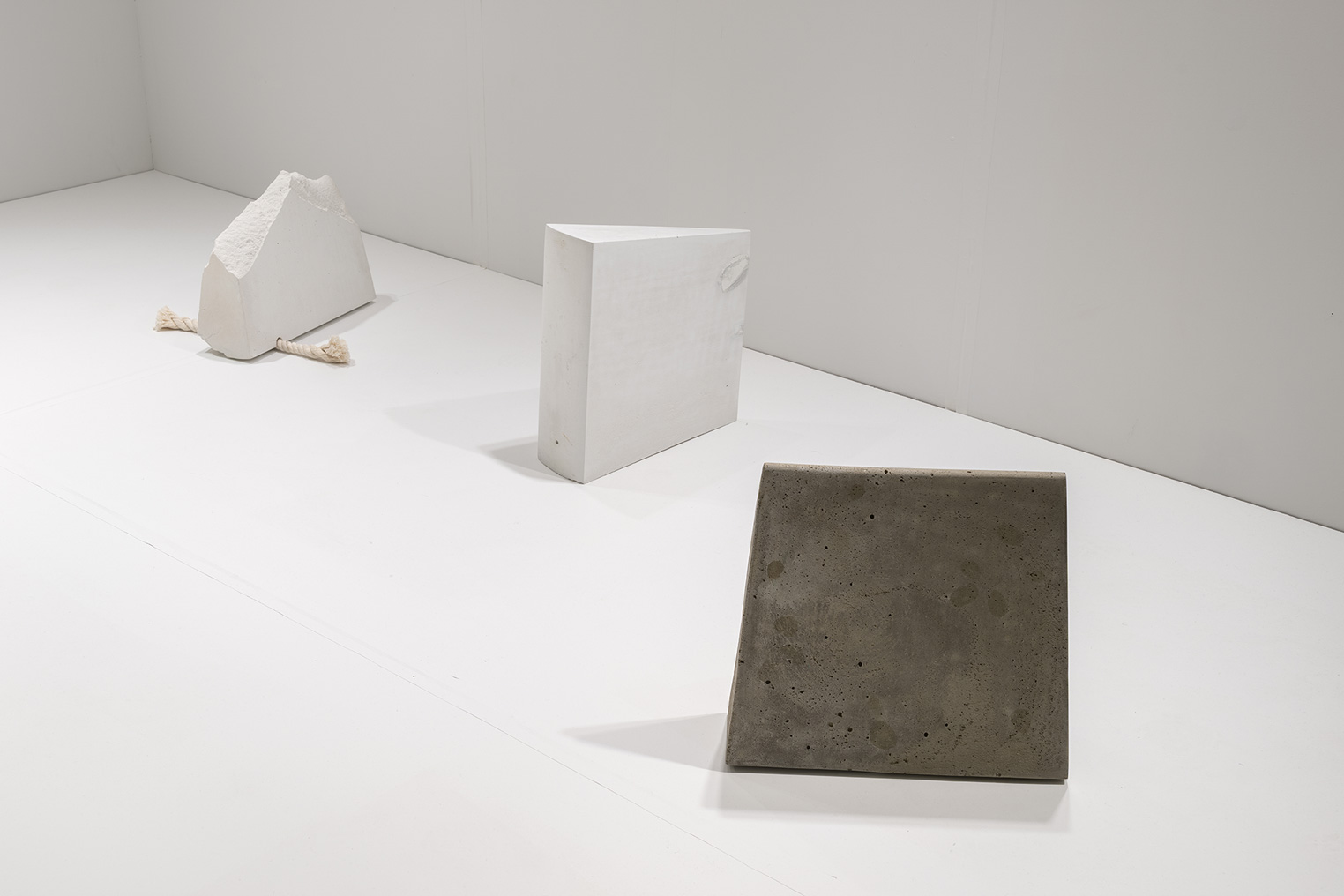
Cement, silica, brass-plated aluminum, pigments, surface treatment, cotton and waxed cotton
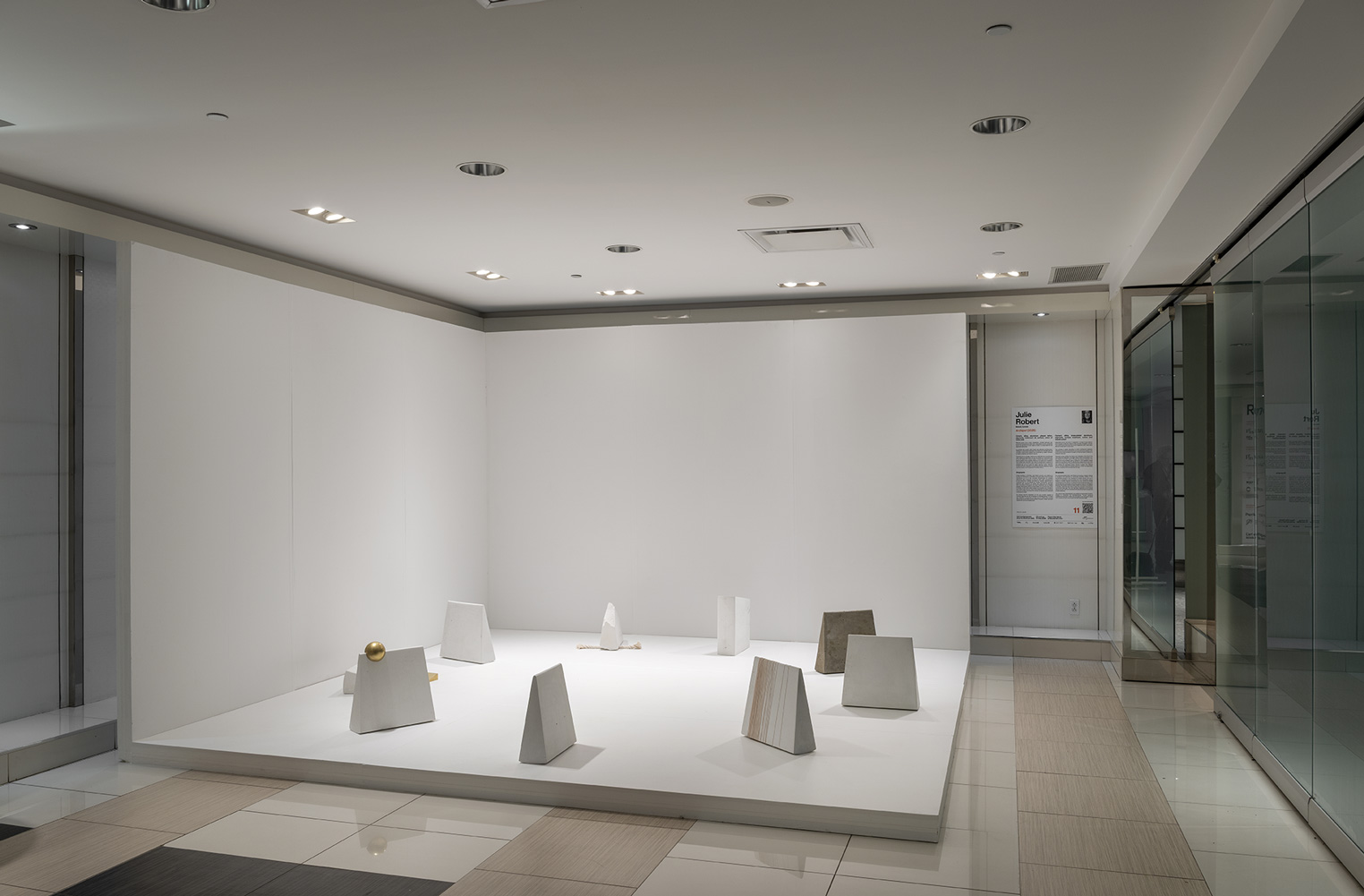
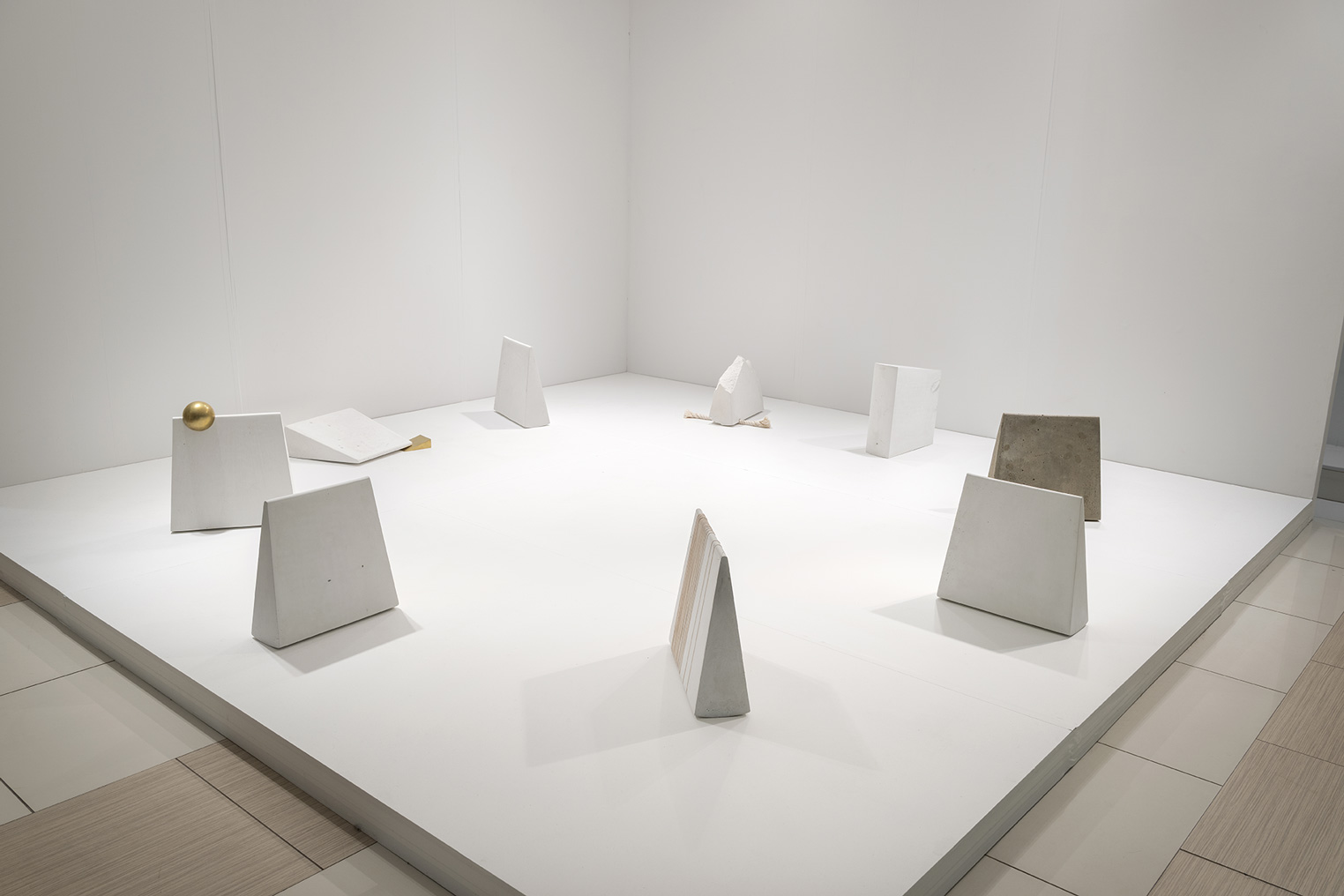
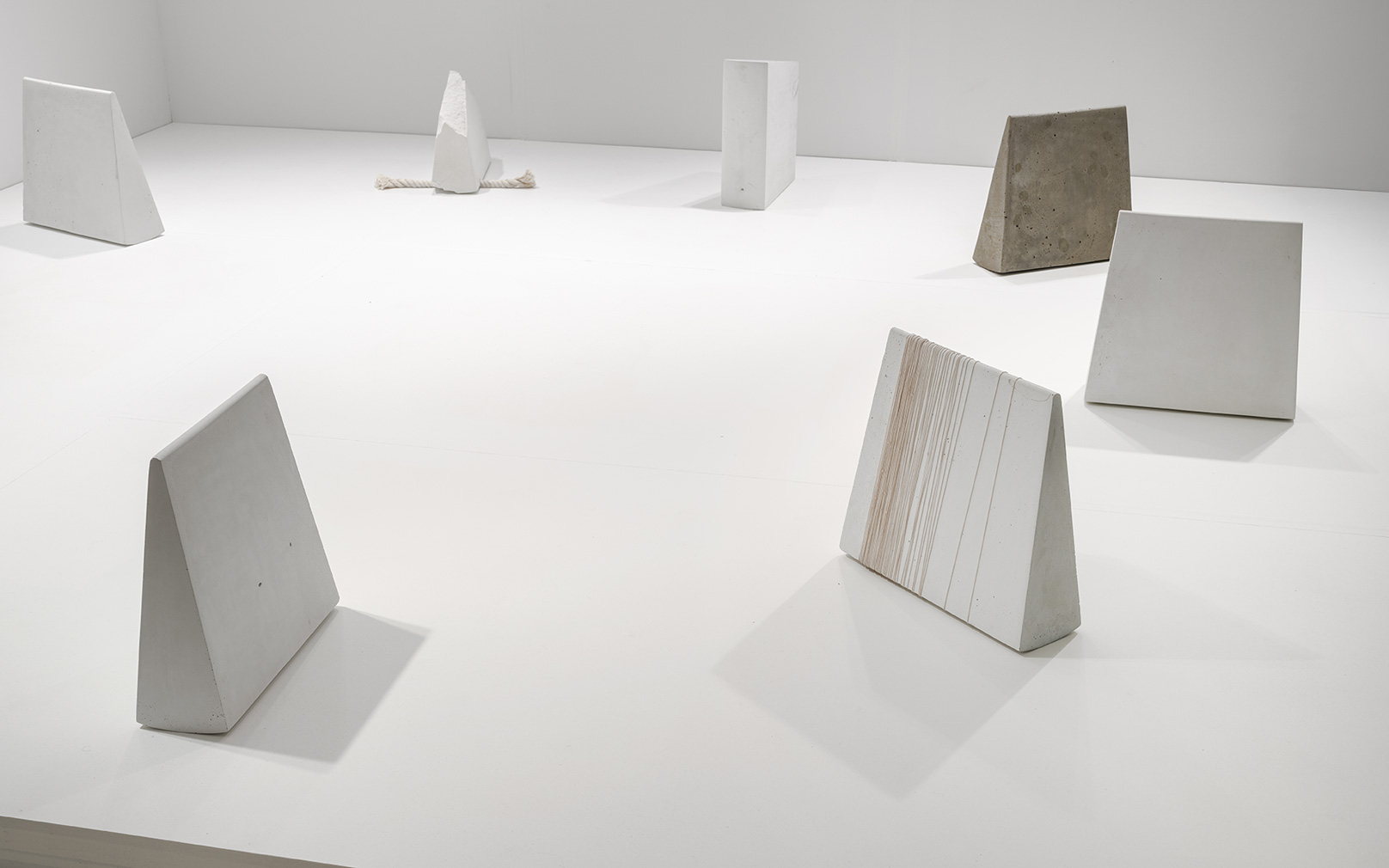
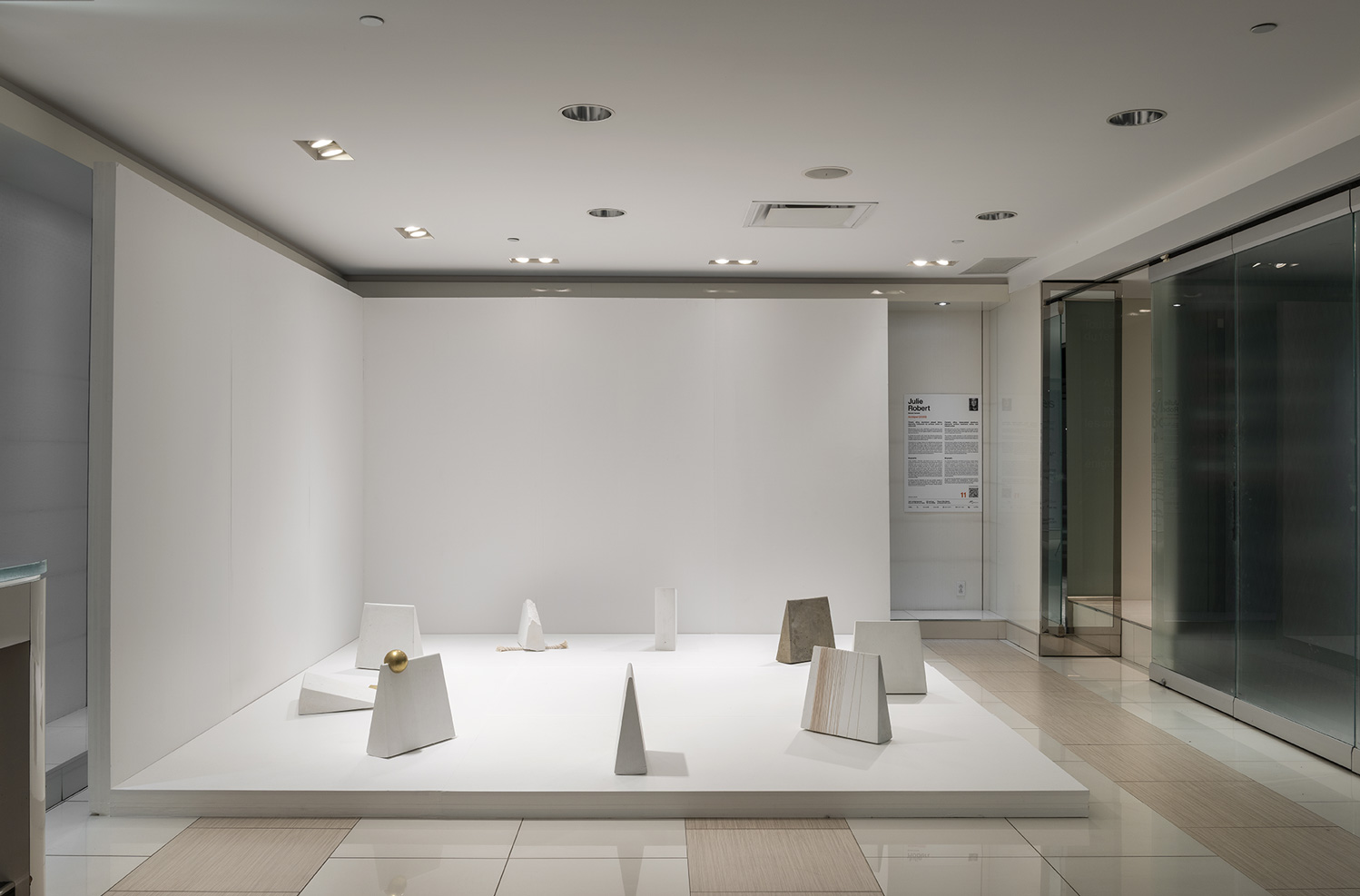
Elaborated around the notion of adaptation, Archipel brings together nine triangular sculptures made of white concrete, arranged in a circle. The whole forms a structure that is both fragile and solid, where each element is dependent on the others.
The principle of spolia, according to which architectural elements, materials or structural components of old monuments are reused in new constructions, leaving traces of the past to influence present creations, is inherent in the work.
Fractured during molding, the history and materiality of the first of the nine pieces are reflected on the eight others, which incorporate in turn the traces of the initial rupture. Through the tensions induced in the material and the processes used to transform it, the installation makes visible its properties but also the adjustments, pressures and scars that have accumulated there, making the elements of the whole integral to one another. By resonating inertia, memory, mutation and material friction, Archipel reveals the delicate balance on which the relationship between singularity and interdependence rests.
Biography
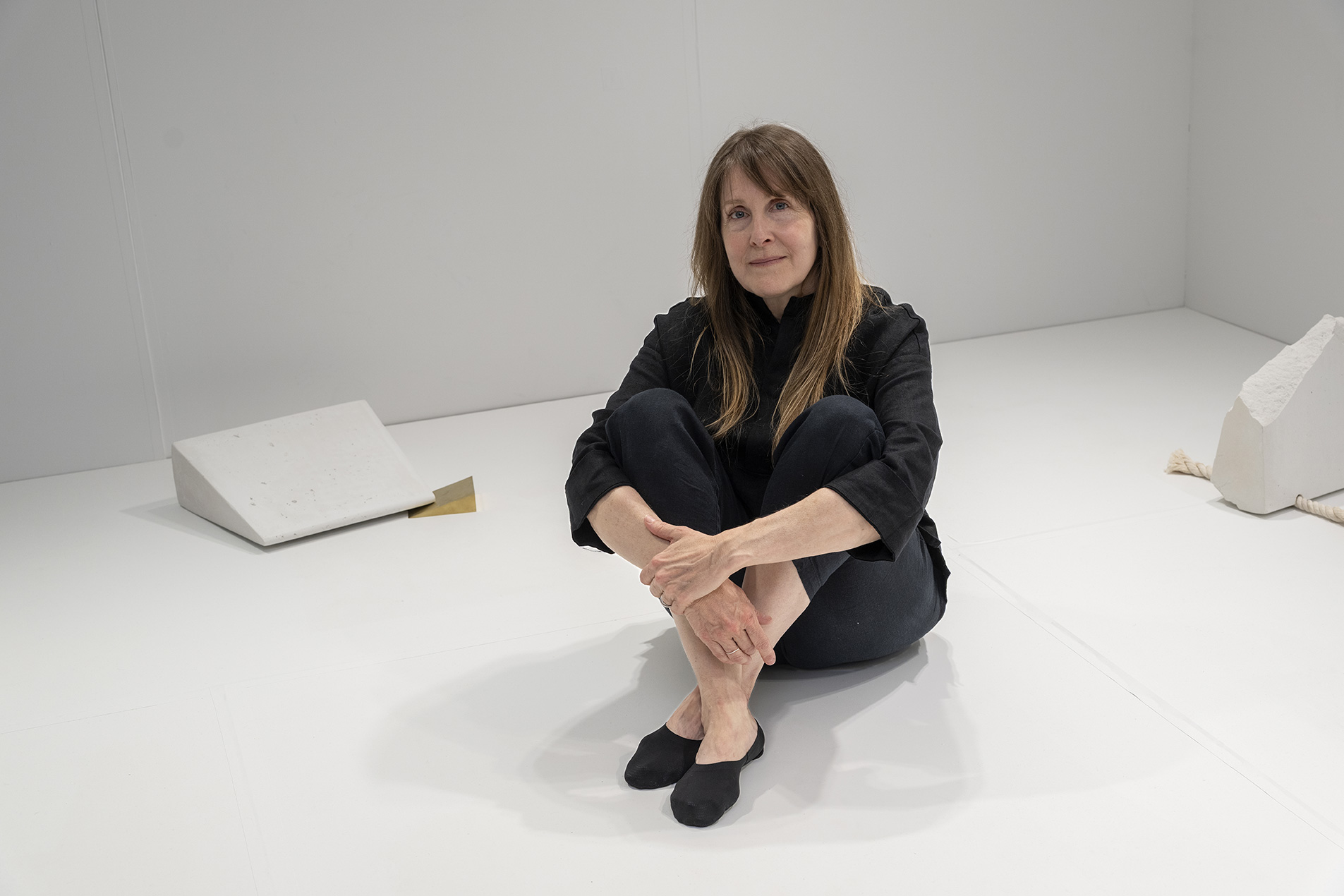
As a Montreal based artist, Julie Robert is pursuing a master’s degree in Sculpture and Ceramics at Concordia University, thanks to two scholarships granted to her. Recipient of multiple awards, she won a public art competition commemorating the most devastating railway tragedy in Canada, selected unanimously by a jury chaired by Danièle Archambault, former director of collections at the Musée des beaux-arts de Montréal.
She contributed a temporary public art piece for the Réseau express métropolitain (REM) and was a finalist in a public art competition in Candiac, where she was invited to adapt her proposal for the entrance of the city’s linear park. Her work has been presented at the Fonderie Darling, Art Mûr, CIRCA art-actuel and Articule, and is a part of public and private collections.
Her practice examines adaptation as a spatial and embodied condition, shaped by constraints and interdependence. Through sculptural installations anchored in matter, she proposes forms that permit rather than impose, putting forward adjustment as an active process.
In collaboration with Concordia University

Works by the artist