Festival Art Souterrain
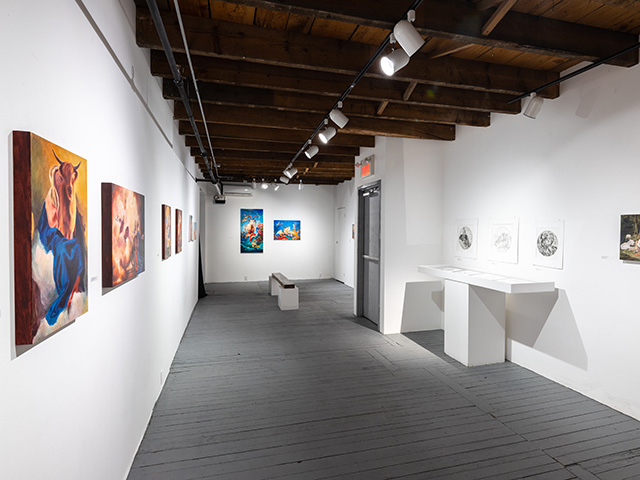
Exhibition place
Opening Hours
Monday: Closed
Tuesday – Wednesday: 10 a.m. – 6 p.m.
Thursday – Friday: 11 p.m. – 7 p.m.
Saturday: 12 p.m. – 5 p.m.
Sunday: Closed
Activities
Opening reception: Saturday, May 2, 2026, from 3 p.m. to 5 p.m.
To Move Across the Land: Colour Is Not Neutral
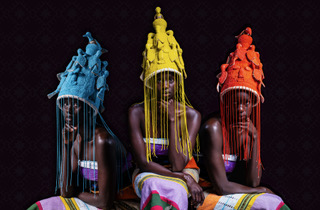
Curators: Armando Perla & Michael Patten
La Biennale d’art contemporain autochtone (BACA)
Art Mûr
Opening Performance: Diego Ventura Puac-Coyoy (Guatemala)
Isaac Te Awa (Aotearoa)
Marilyn Boror Bor (Guatemala)
Cholita Chic (Chile)
Lissy Cole (Aotearoa)
Diego Ventura Puac Coyoy (Guatemala)
Angela DeMontigny (Canada)
Volcancitto alias Juan José Guillen (Guatemala)
Stevei Houkamau (Aotearoa)
Jose Luis Fernando Morales (Guatemala)
Adetona Omokanye (Nigeria/Canada)
Ernesto Ovalle (Aotearoa)
Antonio Pichilla (Guatemala)
Juan Carlos Recinos (El Salvador)
Hugo Rivas (El Salvador)
Anders Sunna (Sweden)
Anna-Stina Svakko (Sweden)
Telly Tuita (Aotearoa)
Renati Waaka (Aotearoa)
Copper Canoe Woman (Canada)
ARIA XYX (El Salvador)
This exhibition brings together Indigenous and diasporic artists who treat colour as material knowledge rather than surface effect. Working across painting, textile, adornment, sculpture, performance, photography, and video, these artists expose colour as something mined, woven, worn, carried, and fought over, rather than chosen or applied. Here, colour emerges from land, labor, and violence: from jade and pounamu, from clay and pigment, from thread, bead, braid, and blood. It carries histories of extraction and trade, colonial desire, spiritual cosmology, and political resistance. Against Western colour theory’s abstraction and neutrality, these artists insist that colour is situated, contested, and embodied. Within the biennial’s broader examination of borders, this exhibition foregrounds how colour itself has crossed borders violently and ceremonially alike. Pigments, stones, and dyes travel through colonial routes, spiritual exchanges, and diasporic continuities. What this exhibition makes visible is that colour is never innocent. It remembers where it comes from.
The exhibition is structured around four interrelated thematic areas that articulate how colour functions as extraction, cosmology, resistance, and transnational memory.
1. Colour as Land: Pigment, Stone, and Extraction
This section foregrounds colour as something pulled from the earth. Jade, pounamu, clay, and mineral pigments appear not as symbols, but as territories shaped by extraction, trade, and ancestral value systems. This section features Stevei Houkamau (Aotearoa New Zealand), whose sculptures combine uku, pounamu, and Guatemalan jade to form a transnational material conversation across Indigenous stone economies; Ernesto Ovalle (Colombia/Aotearoa New Zealand), whose pounamu pendant work foregrounds Indigenous stone as a bearer of lineage, movement, and responsibility; ARIA XYX (El Salvador), whose clay sculptures rooted in Sonsonate soil use colour and material density to confront violence, masculinity, and the body’s relation to land; Volcancitto, aka Juan José Guillen (Guatemala), whose landscape collages layer terrain, memory, and displacement to render land as fragmented but persistent; and Raquel Corona (Mexico), who works with clay and other land-based materials.
2. Colour as Cosmology: Thread, Weaving, and World-Making
Here, colour is structured through textile systems that encode cosmology, social order, and ceremonial knowledge. Threads and patterns operate as living languages rather than decorative motifs. This section features Antonio Pichilla (Guatemala), whose weaving, textile installations, and performance practices activate Indigenous cosmologies through colour, repetition, and spatial rhythm; Isaac Te Awa (Aotearoa New Zealand), whose adornment and fashion are grounded in Māori taonga traditions where colour carries genealogical and ceremonial significance; Luis Fernando Morales (Guatemala), whose necklaces use coral, jade, and other materials whose colours index trade routes, spirituality, and embodied memory; Elias Not Afraid (United States), whose beadwork and adornment encode story, protection, and Indigenous presence in contemporary space; and Renati Waka (New Zealand), whose photography of Takatapui outdoors uses light and landscape to articulate Māori cosmology/atua.
3. Colour as Resistance: Image, Protest, and Refusal
This section focuses on colour as a political and affective weapon. Here, colour confronts state violence, colonial narratives, and imposed silence through visibility and saturation. It features Anders Sunna (Sweden), whose paintings deploy aggressive colour and figuration to confront Sámi land theft, racism, and state violence; Cholita Chic (Chile), whose saturated photography asserts Indigenous, queer, and femme visibility against racialized aesthetics; Adetona Omokanye (Nigeria), whose photographic portraits mobilize fashion and colour as spiritual armor, dignity, and self-authorship; Juan Carlos Recinos (El Salvador), whose watercolours use softness and chromatic subtlety to address memory, vulnerability, and national trauma; and Hugo Rivas (El Salvador), whose paintings directly challenge the legacy of the 1932 genocide, exposing artistic complicity with authoritarian regimes and the violent appropriation of Indigenous women’s images.
4. Colour in Motion: Body, Performance, and Ceremonial Gesture
In this final section, colour moves through bodies. Pigment, textile, braid, and costume activate colour as something enacted, worn, and lived rather than observed. Artists include Diego Ventura Puac Coyoy (Guatemala), whose performance and video work mobilize colour through gesture, movement, and ceremonial action; Telly Tuita (Tonga/Aotearoa New Zealand), whose murals and portraits use colour to articulate Pacific presence, masculinity, and diasporic visibility at an architectural scale; Marilyn Boror Bor (Guatemala), who binds concrete bricks with coloured threads and braids, transforming construction materials into witnesses of Indigenous labor and endurance; Copper Canoe Woman (Canada), whose adornment and fashion practice features gold and shell shield-shaped earrings in which colour signifies protection, sovereignty, and ancestral defense; and Angela DeMontigny (Canada), a fashion designer working with natural materials such as leather, silk, and linen.